Vision Alignment in Oil and Gas: A Critical Factor for Marketing and Business Growth
- Feb 12
- 2 min read
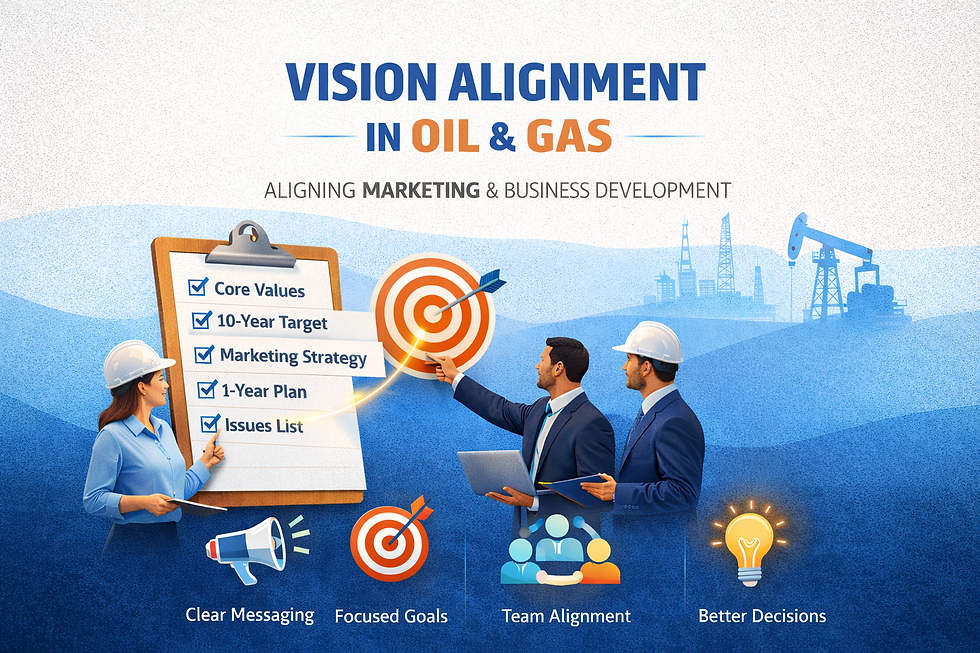
Today, I want to discuss vision alignment in the oil and gas industry, especially for marketers and business development professionals.
In this competitive industry, the best marketing strategies can fail when teams are not aligned on the company vision.
Is Vision Only a Leadership Responsibility?
Companies in the oil and gas industry will always have a vision statement, and you may now say, “Well, vision is a leadership call, not me.” You are right about that; it’s their role to write it, but it’s everyone’s responsibility to be aligned with this vision.
How should leaders align with the vision?
According to Gino Wickman, there are eight questions to answer to align with the company vision.
The eight questions that drive vision alignment:
Core Values?
Core Focus?
10 year Target?
Marketing Strategy?
3 Year Picture?
1 Year Plan?
Quarterly Rocks?
Issues List?
When leaders clearly answer these questions, the outcome is clear company vision alignment.
Why Vision Alignment Is Critical for Oil and Gas Marketers and Business Developers
As a marketer or business development professional in the oil and gas industry, it’s very important to be aligned with the company vision. This industry is very challenging; if you want to succeed in delivering your message to your target audiences, you should first be aligned internally.
Vision Alignment in Practice: A Real Company Example
At the company I work at, vision alignment is taken very seriously; it is not just a statement. It’s consistently updated to reflect what the company’s goal is and to make sure all employees are aligned and contribute to achieving that vision.
Vision Is for Everyone, Not Just Leaders
Vision isn’t created for leaders only; it exists to help employees feel connected to the company through their daily tasks. When employees understand how their work supports the bigger goal, they will engage, and engagement drives results.


